DORKK JOURNAL Mathematics
How to Ace Your Mathematics Exam
Prepare for Mathematics exams with diagnostic questions, worked algebra examples, past-paper routines, calculator checks and realistic revision advice.
Updated
Choose a specific revision route
This guide supplies general school Mathematics practice, not a complete assessment specification or a promise of marks. For Grade 12, use polynomial differentiation, trigonometric identities or the Grade 12 Mathematics papers according to your teacher’s scope. Check the examination body and document label before using a paper.
To prepare for a Mathematics exam, identify the assessment scope, attempt questions independently, correct the first wrong step and revisit the method with fresh questions. This guide shows how to turn that cycle into a practical revision plan without promising a particular result.
1. Start with the Basics
Before tackling complex problems, ensure you have a solid foundation:
- Review fundamental concepts - Don’t skip the basics
- Practice basic operations daily - Build muscle memory
- Understand the “why” behind formulas - Logic beats memorization
💡 Pro Tip: Spend 15 minutes each day reviewing basic concepts before moving to advanced topics.
2. Create a Study Schedule
Consistency is key to mathematics success:
- Set aside dedicated time daily - Even 30 minutes makes a difference
- Break study sessions into manageable chunks - Use the Pomodoro Technique
- Focus on one topic at a time - Deep learning over surface coverage
Sample Study Schedule:
- Week 1-2: Algebra fundamentals
- Week 3-4: Geometry basics
- Week 5-6: Trigonometry
- Week 7-8: Calculus introduction
3. Practice, Practice, Practice
Mathematics is learned by doing:
- Solve various types of problems - Don’t stick to one method
- Work through past exam papers - Understand exam patterns
- Time yourself to improve speed - Build exam confidence
Practice Strategy:
- Familiar questions - Check the foundations before increasing difficulty
- Related questions - Apply the method with different values or wording
- Mixed questions - Practise choosing a method without a topic heading as a clue
4. Understand Rather Than Memorize
Focus on comprehension:
- Learn the logic behind solutions - Ask “why does this work?”
- Connect new concepts to previous knowledge - Build knowledge networks
- Explain problems to others - Teaching reinforces learning
Check understanding: Explain the method, then test it on a fresh question without notes.
What should a Mathematics revision plan contain?
A useful revision plan has four parts: the topics being assessed, evidence of your current understanding, practice that targets the gaps and a later check using fresh questions. Begin with your teacher’s scope and school materials. Do not choose topics only because they appeared in the last paper you downloaded.
For South African schoolwork, consult the relevant CAPS subject documents when you need the official curriculum. The school’s assessment instructions still matter for a particular test. Mathematics and Mathematical Literacy are different subjects, so confirm the name before gathering resources or comparing papers.
Give each revision task an outcome. “Do algebra” is broad; “solve four quadratic equations and explain why each method fits” is assessable. Keep a record of questions you could not start independently. They tell you where an explanation or prerequisite review is needed before another full practice paper.
How do you diagnose your weakest topics?
Choose a short set of questions covering the assessment scope. Attempt them without opening the memorandum. Mark any step where you used a hint, guessed a method or could not explain a rule. Those marks are useful even when the final answer happens to be correct.
Classify the errors. A concept error means an idea is misunderstood; a method error means the wrong process was chosen; a calculation error means the process was appropriate but carried out inaccurately. An interpretation error means the question or graph was read incorrectly. These categories are practical labels, not formal diagnoses.
Suppose you can solve an equation presented on its own but cannot form it from a word problem. More drills on rearranging the same equation may not address the difficulty. Practise translating a sentence into a mathematical statement, identify the unknown and explain what the symbols represent before calculating.
Worked example: checking an algebra answer
Consider this illustrative question: solve 3(x − 2) = 15. First expand the left side to get 3x − 6 = 15. Add six to both sides, giving 3x = 21. Divide by three to obtain x = 7. Finally, substitute seven into the original expression: 3(7 − 2) = 15.
The check is important because it tests the answer against the question you were asked, not against a rewritten line that may already contain a mistake. If you expanded 3(x − 2) as 3x − 2, substitution would reveal that your resulting answer does not satisfy the original equation.
Write a short explanation beside the error: “The three multiplies both terms inside the brackets.” Then attempt 4(x − 3) = 20 independently. A fresh question checks the corrected method. Copying the same solution again mainly checks whether you can reproduce what is in front of you.
How should you use worked solutions and memoranda?
Use the memorandum after a genuine attempt. Compare the reasoning line by line and find the earliest difference. The final numerical answer is not enough: a method can be wrong even if two mistakes cancel each other out. Equally, an arithmetic slip does not necessarily mean the entire concept is misunderstood.
If the solution uses another method, check whether your method is mathematically valid and consistent with the task’s instructions. A question may require a particular approach, construction or form of answer. Ask the teacher about marking conventions rather than assuming that any correct-looking line will earn a particular mark.
Keep the correction brief. Write the question reference, the first wrong decision, the correct reasoning and a new question to attempt later. Return to the correction after working on something else. If the same error remains, use a simpler example or ask for an explanation of the underlying concept.
How do you move from topic practice to a full paper?
Topic practice lets you focus on one method. A mixed exercise asks you to recognise which method is needed. A timed paper adds the challenge of allocating attention across several questions. Move between these stages according to what your work shows, rather than beginning every session with a full examination.
A possible sequence is to learn one method, solve a few questions, include it in a mixed set and later use it in a timed section. If you cannot start the mixed questions, revisit the cues that distinguish the methods. If you start correctly but run out of time, review fluency and decisions after checking accuracy.
Use the Past Papers finder to locate available papers and memoranda. Check the subject, grade, year, language, session and paper number. An older document can still provide practice, but its structure or content may differ from the current assessment. Follow your school’s guidance when selecting questions.
What is a sensible exam-time strategy?
Read the paper’s instructions before deciding how to work. Note the total time and marks, then allow some time for checking. If you use marks to guide pacing, treat the result as a rough planning tool. Different question types may require different amounts of reading, diagram work and calculation.
When you get stuck, write a meaningful start if you can: define a variable, identify a relationship, label a diagram or set up an equation. Then decide whether to continue or return later. Repeatedly staring at the same question can consume time needed for work you can complete.
Show working in a sequence another person can follow. Label answers, include units where appropriate and follow rounding instructions. Do not rely on a calculator display as the only record of reasoning. Before submitting, check whether you answered every part and whether a result is plausible in the problem’s context.
How should you prepare your calculator and materials?
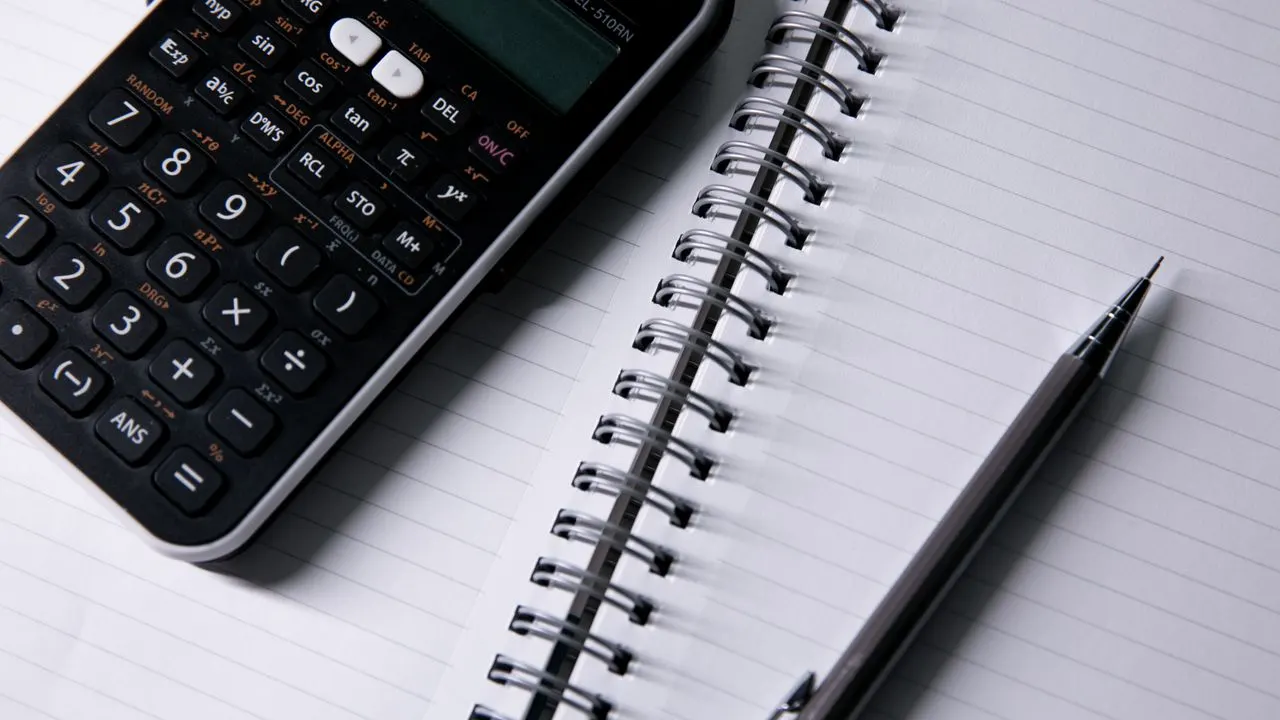
Use the calculator allowed by your school or examination instructions. Practise with that device before the assessment. Learn how it handles fractions, brackets, negative numbers and angle mode when those functions are relevant. A familiar button sequence can still produce the wrong result if the expression was entered incorrectly.
Write the mathematical expression before typing it. Compare the display with the written version, especially when powers, roots or denominators are involved. Estimate the result where possible. An estimate can reveal a misplaced decimal or missing bracket without requiring you to repeat every calculation.
Prepare permitted equipment and documents in advance. Confirm arrangements with the school rather than relying on a general online checklist. The aim is to reduce avoidable uncertainty, not to introduce an elaborate new routine immediately before the test.
A practical revision session for a difficult topic
Begin with two questions you attempted previously, but use fresh values or a different form. Work without notes first. If the first error shows a missing concept, consult one targeted explanation. Pause and explain the key decision in words before attempting a related problem.
Next, solve a small mixed set so the method is not announced by the worksheet heading. Mark the set carefully and record the earliest incorrect step. Finish by writing one question you would ask the teacher. That gives the next lesson a purpose and makes it easier to request useful feedback.
A learner with many unfinished topics may feel tempted to skip checking. Resist that pattern by reducing the number of questions instead. Two corrected questions and a later independent attempt can teach you more about the gap than a large unmarked pile.
Questions about Mathematics exam preparation
How many past papers should I finish?
There is no universal number. Choose enough practice to identify and revisit the topics you need, and leave time to mark and correct it. Completing a paper without learning from the errors is not the same as completing a useful revision cycle.
Should I memorise every worked answer?
Memorise required facts and relationships as appropriate, but practise the decisions behind solutions. Examination questions can change the numbers, wording and context. You need to recognise the mathematical structure rather than remember where a particular answer appeared.
What if I am revising late?
Use the assessment scope to select important gaps and ask the teacher what is realistic. Focus on a manageable set of topics, work carefully and check your attempts. Avoid promises that one last-minute trick can replace missed teaching or guarantee a particular result.
How can dorKk help with revision?
Use the Mathematics subject guide and Resources to find explanations relevant to your task. Confirm grade, topic and current lesson availability. After any explanation, return to an independent question: that is where you find out what still needs attention.
Your next step before the next assessment
Take one marked question, locate the first incorrect step and explain the correction in a sentence. Attempt a fresh version without notes, then include the same skill in a mixed set later. This keeps revision connected to the work you need to improve, rather than simply increasing the number of pages completed.