DORKK JOURNAL Study Tips
5 Effective Study Strategies for South African Students
Five practical study strategies for South African learners, with a weekly example, mistake log, past-paper advice and answers for parents.
Updated
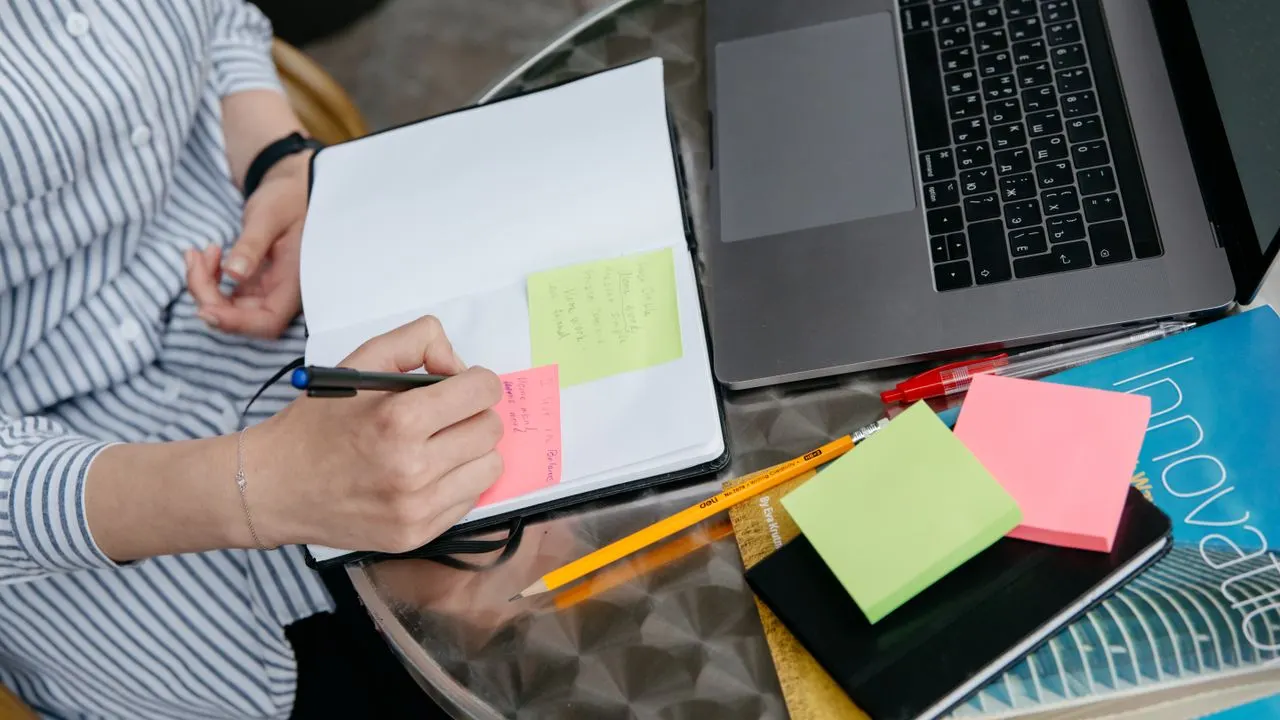
Turn the routine into a reusable record
Use the revision record and example for your weekly plan. Keep this shorter session log alongside it:
| Date and question | First uncertain step | Correction checked against | Next independent question | Result |
|---|---|---|---|---|
| Fill in the actual reference | Write one step | Class example or explained answer | Choose a different question | Independent / needed help |
The five strategies above are options within one routine, not five extra daily workloads. Choose a manageable task, attempt it, check it and use the result to plan the next session.
Studying effectively is crucial for academic success, especially when navigating the South African education system. The five strategies below provide a starting framework; adapt the tasks to the learner’s grade and use independent work to check what helps.
1. Create a Structured Study Schedule
Consistency is key to effective learning. Develop a study schedule that:
- Allocates specific time slots for each subject
- Includes regular breaks to prevent mental fatigue
- Accounts for your peak energy hours when you’re most alert
- Balances study time across all subjects
Tip: Keep a simple record of attempted questions and corrections so the next study task addresses a specific gap.
2. Use Active Learning Techniques
Passive reading isn’t enough. Engage with your material through:
- Summarizing key concepts in your own words
- Creating mind maps to visualize connections
- Teaching concepts to friends or family members
- Practicing problems regularly, especially in Mathematics and Sciences
3. Leverage Technology Wisely
Digital tools can enhance your learning when used correctly:
- Watch educational videos to reinforce classroom learning
- Use online practice tests to assess your understanding
- Create digital flashcards for memorization
- Join online study groups for collaborative learning
4. Practice Past Papers Regularly
Past papers are invaluable for exam preparation:
- Familiarize yourself with question formats
- Practice time management under exam conditions
- Identify knowledge gaps that need attention
- Build confidence for the actual examination
5. Maintain a Healthy Study Environment
Your environment significantly impacts learning effectiveness:
- Find a quiet, well-lit space for studying
- Keep all necessary materials within reach
- Minimize distractions (phone, social media, TV)
- Ensure comfortable seating and proper posture
How do you turn five strategies into a workable routine?
A study strategy is useful when you can apply it to a real task and check the outcome. Start with a recent exercise, assessment or set of teacher instructions. Decide whether the immediate challenge is understanding, remembering, planning or using knowledge under time pressure. Those problems can overlap, but each calls for a slightly different activity.
If a learner cannot explain a concept at all, another timed test may not help. Begin with instruction and a small example. If they understand it during the lesson but forget it later, add a return session. If they solve familiar questions but struggle with mixed tasks, practise recognising which method is required. This keeps the five strategies connected to evidence rather than becoming a checklist completed mechanically.
The following routines are illustrative. Adapt them to the learner’s grade, school timetable and available study space. They are not a promise of particular marks or a requirement to study for the same number of minutes every day.
Start with a task that is small enough to finish
A timetable entry saying “English” does not explain what to do. Rewrite it as an observable task: “Plan a paragraph answering this comprehension question and support the point with one quotation.” For Mathematics, choose something equally clear, such as “Solve three equations with brackets and check each answer by substitution.”
Before starting, put the necessary material together. That might be a textbook, one worksheet, a calculator if permitted and a blank page. Open only the relevant lesson on a device. Having fewer competing tasks in front of you makes it easier to notice what is actually difficult.
At the end, ask whether the task was completed independently. If it was not, identify the first missing step. A small unfinished task with a clearly identified obstacle can be more useful than an hour of moving between subjects without a meaningful attempt.
A practical five-day study example
Imagine a Grade 9 learner who needs to revise linear equations while keeping up with other subjects. On Monday, they attempt two questions from their school notes without looking at the answers. They can solve an equation with positive numbers but lose a negative sign when brackets are involved.
On Tuesday, they revisit the teacher’s explanation of expanding brackets and complete three focused questions. On Wednesday, they return to two fresh questions without notes. Thursday’s review mixes an equation with a fraction calculation and a graph task. On Friday, they mark the work and write a short question for the teacher if the sign error remains.
This is a planning example, not a curriculum schedule. The value comes from the sequence: diagnose, learn, attempt, vary and check. A different learner may need longer at the explanation stage or a simpler prerequisite task before the weekly pattern becomes useful.
Use a mistake log that leads to another attempt
A mistake log should be short enough that you will use it. Divide a page into four columns: question, first incorrect step, correction and next check. Record the earliest point where the reasoning went wrong rather than copying an entire memorandum into the notebook.
For example, “Question 4: expanded −2(x − 3) as −2x − 6; both terms must be multiplied by −2; try a new brackets question on Thursday.” That entry explains an action. “Careless mistake” does not, because it gives you no clear way to check improvement.
Group repeated errors after several sessions. If most involve understanding the question, practise reading and restating instructions. If most involve calculation, choose a short accuracy exercise. If the learner knows the method but cannot finish in time, work on fluency after checking that the understanding is secure.
What should you do before and after a video lesson?
Before the lesson, write the question you want answered. “Why do we multiply every term inside the brackets?” gives the viewing a purpose. Make an attempt first if you can. That attempt will help you notice the point at which the explanation differs from your reasoning.
During the lesson, pause before a demonstrated step and predict what comes next. Use a short note to record the decision, not every spoken sentence. Afterwards, put the video away and answer a related question. If you need to look back, record which part of the method needed support.
Browse Subjects for relevant lesson guides, but confirm current app coverage before subscribing. Public Resources and your school materials can supply other practice opportunities. The learning task should continue after the screen is closed.
How do you study when time or space is limited?
Begin with what you can control. A shared table can still support a short task if everyone knows when it starts and ends. Keep a simple folder or bag of materials so preparation does not consume the session. If a device is shared, plan the video portion separately from the written practice.
When connectivity is unreliable, prepare the question list in advance and use school notes or printed resources for independent work. Do not assume that a particular platform provides offline downloads: check the app’s current features. Also consider the data cost before streaming long lessons repeatedly.
A missed session does not require rebuilding the entire timetable. Move the most important unfinished task to the next realistic opportunity. Reduce its scope if necessary, while keeping the independent attempt and feedback. A workable routine includes a way to restart after disruption.
How can study groups stay focused?
Give the group one shared purpose. Each person might bring a question they attempted and explain the first difficult step. Agree to spend a short period working individually before comparing answers. This prevents the quickest learner’s explanation from replacing everyone else’s practice.
Assign a rotating role for checking the question, explaining a method and challenging an assumption. If the answers differ, consult the teacher’s notes or a reliable solution rather than taking a vote. Confidence and correctness are not the same thing.
End with an individual question or written explanation. That checks whether every learner can use the discussion independently. A group session is not successful merely because it was lively or produced a neat shared page. Each participant should leave knowing what they can do and what still needs work.
What should parents ask during a weekly check-in?
Ask three concrete questions: “What can you do more independently now?”, “Which mistake is still appearing?” and “What do you need from school or home next week?” Let the learner show an example rather than reporting only a general feeling about the subject.
Offer practical help such as finding a quiet interval, printing a worksheet or reminding them to ask a teacher a question. Avoid turning every conversation into a discussion of marks. A learner may become more independent before that progress is reflected in a formal assessment.
For younger children, the adult may need to read instructions and divide the task into smaller steps. For older learners, agree on a check-in without supervising every line. The right balance gives support while leaving the thinking and practice with the learner.
Common questions about study strategies
Is a colourful timetable necessary?
No. A plain list of specific tasks and review dates can work. Include school deadlines and leave room for unfinished work. The timetable is a tool for deciding what to do; making it attractive should not replace doing the tasks.
Should I always start with the hardest subject?
Not necessarily. Choose the order that lets you work carefully. You might begin with one manageable question, then tackle a demanding task while attention is available. If the hardest work is always postponed, give it a protected place rather than hoping motivation will appear.
Can I study only from past papers?
Past papers are useful for applying knowledge and identifying gaps, but they may not explain a topic you have not learned. Alternate practice with appropriate instruction. Check the paper’s grade, subject, language and scope before using it. The Past Papers finder can help locate relevant documents.
How do I know whether the routine is working?
Compare independent attempts over time. Look for better starting decisions, fewer repeated errors and clearer explanations. If those do not improve, change the task or ask for help. More hours of the same unsuccessful activity are not automatically the answer.
Evidence and useful next reading
The Institute of Education Sciences practice guide supports spaced learning, quizzing and combining examples with problem-solving. It does not prescribe the particular weekly timetable in this article. Treat the routines here as adaptable examples and use your own work to judge their usefulness.
For a more detailed explanation of those principles, read The Science Behind Effective Learning. For a revision plan across subjects, use the CAPS revision guide. Choose one change to try first, and keep the part that helps you produce better independent work.